B2B Webinar Strategy: Plan, Promote, Repurpose
By Andrew Mark, Co-founder, Mir Tech
Published Updated 6 min read
On this page
Registrations show that people clicked. They do not show whether the right people came, paid attention or talked to you afterward. So a webinar plan that opens with a registration target is easy to write and hard to use.
This article follows one webinar from idea to follow-up, using an invented company. "Example Co" is hypothetical. It sells spend-review software to finance leads at small SaaS companies, has a three-person sales team and has never run a webinar. Nothing below describes a real result. It shows the order of decisions.
Three weeks before: outcome, list, title
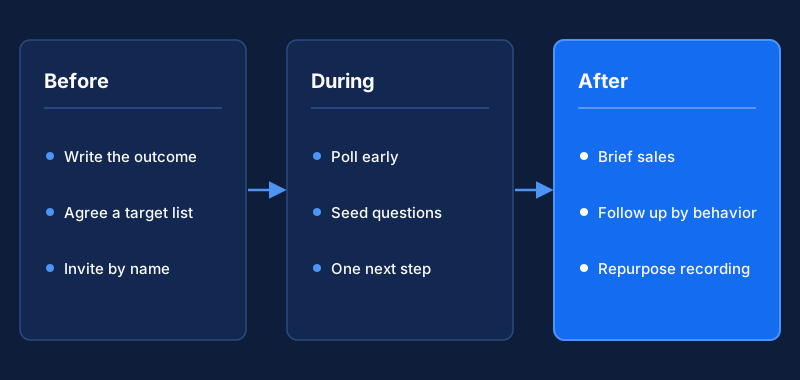
Example Co starts one step before the topic. It writes down what the webinar is for, in a sentence a salesperson can check: "Book conversations with finance leads at the 60 accounts we are targeting this quarter." A different goal would produce a different webinar. "Give existing customers a reason to try the second product" calls for another topic, guest list and follow-up.
Next, the founder and the sales lead agree on the 60 accounts and the roles to invite. The list shapes everything after it: who to invite, which examples to use and how to judge the result. If Example Co's positioning were still unsettled, it would run a smaller test first, and messaging alignment is the work that makes the topic and promotion easy to write.
Then comes the title, which should tell the right person "this is for you" and the wrong person "this is not." "Improving your finances" says nothing. "How finance leads at SaaS companies review software spend each quarter" filters. Example Co takes the wording from sales-call notes and customer interviews, and the customer research guide explains how to collect those words.
What the benchmarks imply
Goldcast's 2025 B2B webinar benchmark report puts the average at 238 registrants and 51 attendees per webinar, an attendance rate of 33%, with about 80% of webinars now published on demand and an average watch time of about 29 minutes. The figures come from one vendor's customers, so treat them as a rough guide.
Three things follow. Example Co expects most registrants not to attend live, so it plans for the recording and for follow-up to people who missed it. It puts the useful part early, because many viewers will leave before the end. A common length is 30 to 45 minutes including questions. And it does not read a modest first result as failure.
The same report found that events published as a series drew more registrations than one-offs, and that events with the word "webinar" in the title drew more registrations than average. The old advice to avoid that word is a reminder to test, and not to follow a rule from a few years ago.
Two weeks before: invite by name
With a list, promotion becomes personal. The sales lead and the founder each send short notes to named contacts: "we are running a session on software spend reviews for finance leads and I thought of you." That works better than a link in a mass email. Example Co also emails the relevant segments only and asks team members to post in their own voices, and the LinkedIn strategy guide shows how founders can do that without sounding like an ad.
It offers the session to two communities where finance leads gather, where the rules allow it. A partner with a similar audience could co-host, but Example Co would check audience fit first and ask who from the partner would speak.
If registrations from the list lag a week before the event, Example Co does not widen the audience. It sends a second personal note to the missing accounts, adds one sentence on what attendees will be able to do afterward, and checks whether the title still matches what the target roles say they struggle with. Widening the audience fills the room and empties the follow-up.
Promotion runs two to three weeks. Every few days the sales lead checks which target accounts have registered and chases the missing ones personally. A reminder goes out the day before and one an hour before, each with a calendar invitation, because many people forget a session they registered for weeks earlier.
The session: a problem, a method, a short pitch
Example Co treats the hour as a chance to learn who is interested and why. The talk has three parts, roughly a third each. First comes the problem, described in the audience's words with real examples. Second is a method the audience can use without buying anything, which is where trust forms. Third is a short, honest look at how the product helps with that method, including who it is not for.
The speaker is a finance practitioner who has run these reviews, because a person who solved the problem is more credible than an executive reading slides. They rehearse once, including the questions they dread. Two audience questions are seeded in advance in case the room is quiet.
Time management matters more than slides. Example Co plans the problem section for about ten minutes and the method for about fifteen, so the pitch and the questions both get real time even if the first section runs long. The host, who is not the speaker, watches the chat and feeds the best questions in as they arrive. When the room is quiet, the host reads a seeded question aloud rather than letting the silence stretch.
Polls do the learning. "Which of these is the biggest obstacle for your team right now?" says more than "How big is your company?" Every poll answer, question and chat message gets recorded by name for sales.
The day after: follow up by behavior
Most of the value arrives after the session, and one email to everyone wastes it. Example Co splits the list by what people did.
| Group | What they did | Follow-up |
|---|---|---|
| Engaged attendees | Asked a question, answered polls, stayed to the end | A personal note within a day or two from the person who knows them, referring to what they said |
| Quiet attendees | Attended but did little | The slides, the recording and one related resource |
| No-shows | Registered but did not attend | The recording and a two-line summary of what they missed |
| Target accounts that did not register | On the list, no response | A short personal note with the recording |
The founder does not send these notes. The seller who owns the account does, because the contact already knows their name, and the founder steps in once someone replies with a real question. Each seller gets a brief for their accounts:
Webinar: {{webinar_title}}
Date: {{date}}
Who attended from your accounts: {{names_and_companies}}
What they asked or answered: {{questions_and_poll_answers}}
Suggested opening line: {{opening_line}}
Recording link: {{recording_url}}
A follow-up that starts from what the person said continues a conversation, and a cold email does not. The next step is tied to the topic, such as a short call to look at their own review process, and it is easy to decline. To route and automate these follow-ups by behavior, the segment automation framework is a good starting point.
The next two weeks: repurpose the recording
One hour of material makes several assets, and the recording keeps working because most events are now watched on demand. Example Co publishes a written summary with the recording embedded, posts two or three short clips where the speaker makes one clear point, and redraws one framework from the slides as a standalone graphic. It sends the three main ideas to non-attendees, one per message, and gives sales a clip they can send when a prospect raises the same question. The questions from the session suggest the next topic. Automatic transcripts contain errors, especially in names and product terms, so someone edits before anything is published.
What Example Co would measure
It picked three or four numbers before the event and would look at them a few weeks later. First, registrations and attendance from the target list, as a share of the 60 accounts. Second, conversations or meetings started with attendees. Third, opportunities that involved an attendee, and whether they would have started without the event. Fourth, views of the recording, and what viewers did next.
It would also count the cost honestly: platform, promotion, preparation and everyone's time. A small event that starts several relevant conversations beats a large one that starts none. If Example Co then ran the session again, it would change one thing.
Frequently asked questions
Do I need a dedicated webinar platform?
Not at first. Any tool that handles registration, a live session, polls and a recording will do. Choose one that can export registrant and attendance data to your CRM, because that data drives your follow-up. Check the export before you commit, since some tools lock attendance data behind higher plans.
Can a webinar work if my list is small?
Yes. A small, well-chosen list of target accounts is often better than a large mixed audience. Invite people personally, keep the session short and judge it by the conversations it starts. A room of twelve relevant people can beat a hundred registrants who never speak.
Should the session be live or pre-recorded?
Live gives you questions, poll answers and a reason for people to turn up, which is most of the learning. A pre-recorded talk with live Q&A afterward is a good compromise for a nervous speaker. Fully pre-recorded sessions work as on-demand content, but you lose most of the signals that sales needs.
Related Content
Content Distribution Playbook: One Core Piece, Many Channels
How small B2B teams can turn one strong piece of content into posts, emails, talks and sales assets, with a distribution plan you can run weekly.
Gated or Ungated? A Distribution Plan for Your Ebook
How to decide whether to gate a B2B ebook, and a step-by-step distribution and follow-up plan so the asset reaches buyers instead of sitting on a server.
Personalize Website and Email Content by Segment
A practical guide for B2B teams to personalize web and email content by segment: plan variants, add fallbacks and test against a control group.